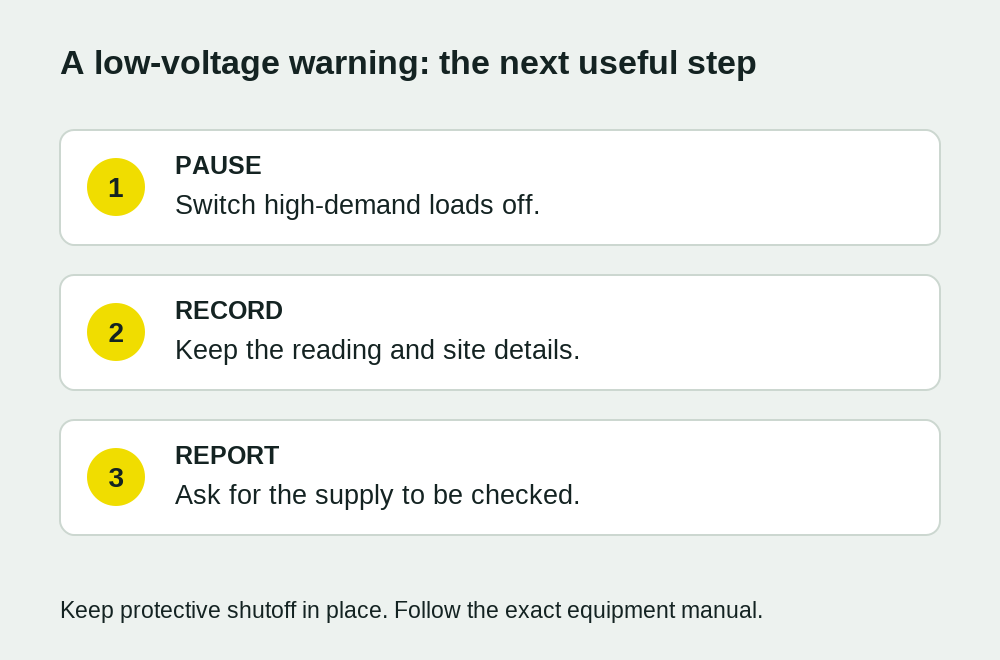
A low reading deserves a pause.
If your RV reports low shore-power voltage, switch off high-demand appliances such as the air conditioner and electric water heater. Read the display and your equipment’s instructions, then ask the campground to check the supply. If a protection device has disconnected output, leave that protection in place.
Before anyone tries again, save the reading, the time, the site number and what was running. A repeated warning needs an explanation; repeatedly restoring power does not provide one.
First, understand what the display is telling you.
This guide concerns a North American RV connected to nominal 120V shore power. Airstream describes 30A campground service as 120V; operating limits still come from the manuals for your own appliances and protective equipment. [1]
Record the number together with its unit and location. Volts (V), amps (A) and watts (W) describe different things. Also note whether you are reading a receptacle meter, a protection device or an app. A reading inside the RV should not be described as a measurement taken at the pedestal.
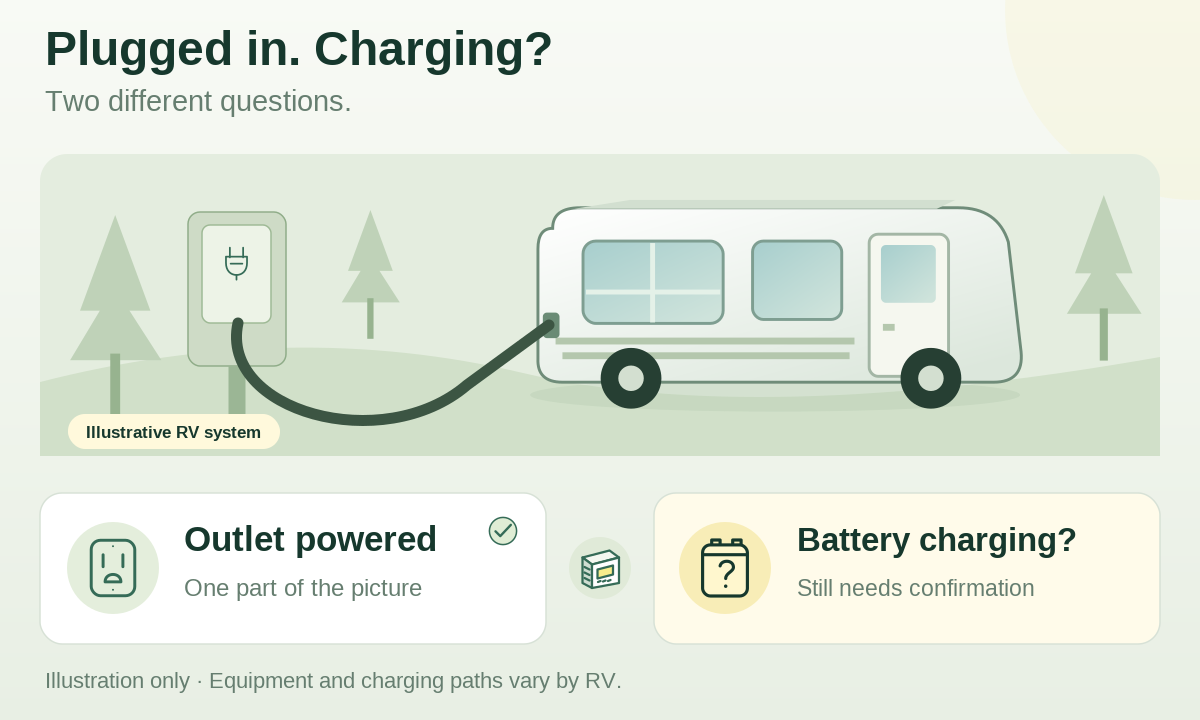
The opening illustration is schematic. Read the number, unit and message on your own installed device rather than inferring a trip setting from the drawing.
Read the message as well as the number.A low-voltage warning, an open-ground indication and a restart delay are different observations. Use the code list for the device that actually produced the message.
No single cutoff number can stand in for both an appliance’s operating requirements and every protector’s settings. A device still passing power is not, by itself, permission to keep using equipment that is behaving abnormally.
Related guideSurge protector or EMS? Read the functions first. →Give the campground a clear snapshot.
Start with the site number and time of day. Describe what changed: was the reading already low when you arrived, or did the warning appear when an appliance started? A photo of a normally accessible display can preserve a detail that disappears after a power interruption.
| Write down | Include these details |
|---|---|
| Where and when | Campground, site number, date and time. |
| What you read | Voltage, exact message or code, device model and reading location. |
| What was running | A/C, microwave, electric water heater and other active loads. |
| What changed | What happened when you switched a load off, and whether protection disconnected output. |
| What you noticed | Odour, visible damage or unusual behaviour, observed without opening or dismantling equipment. |
This is a record of the event, not a diagnosis. Even if the reading improves when a large appliance is switched off, that observation alone does not locate a fault in the campground supply, connection or RV.
Installation context is different from a fault record.
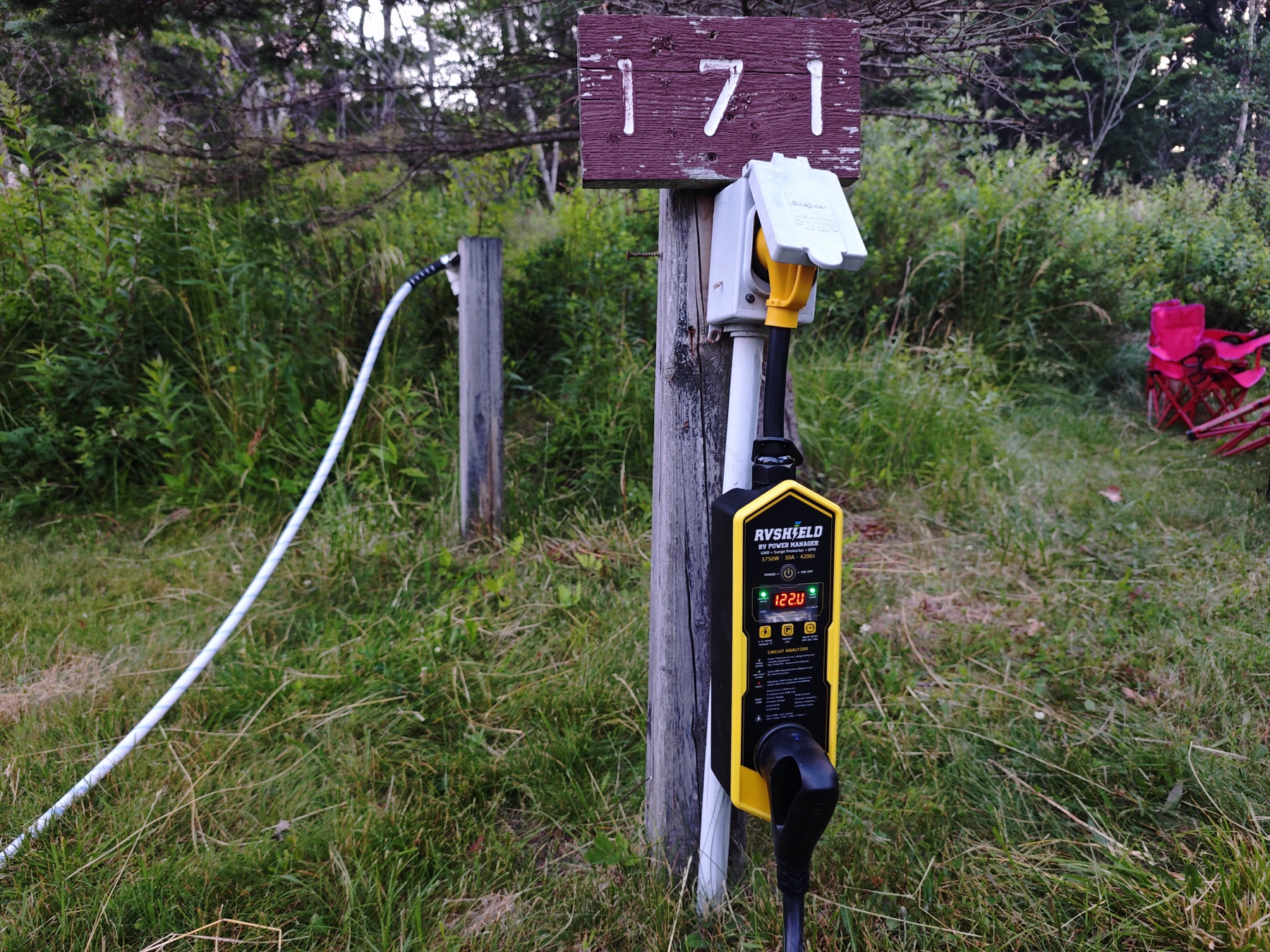
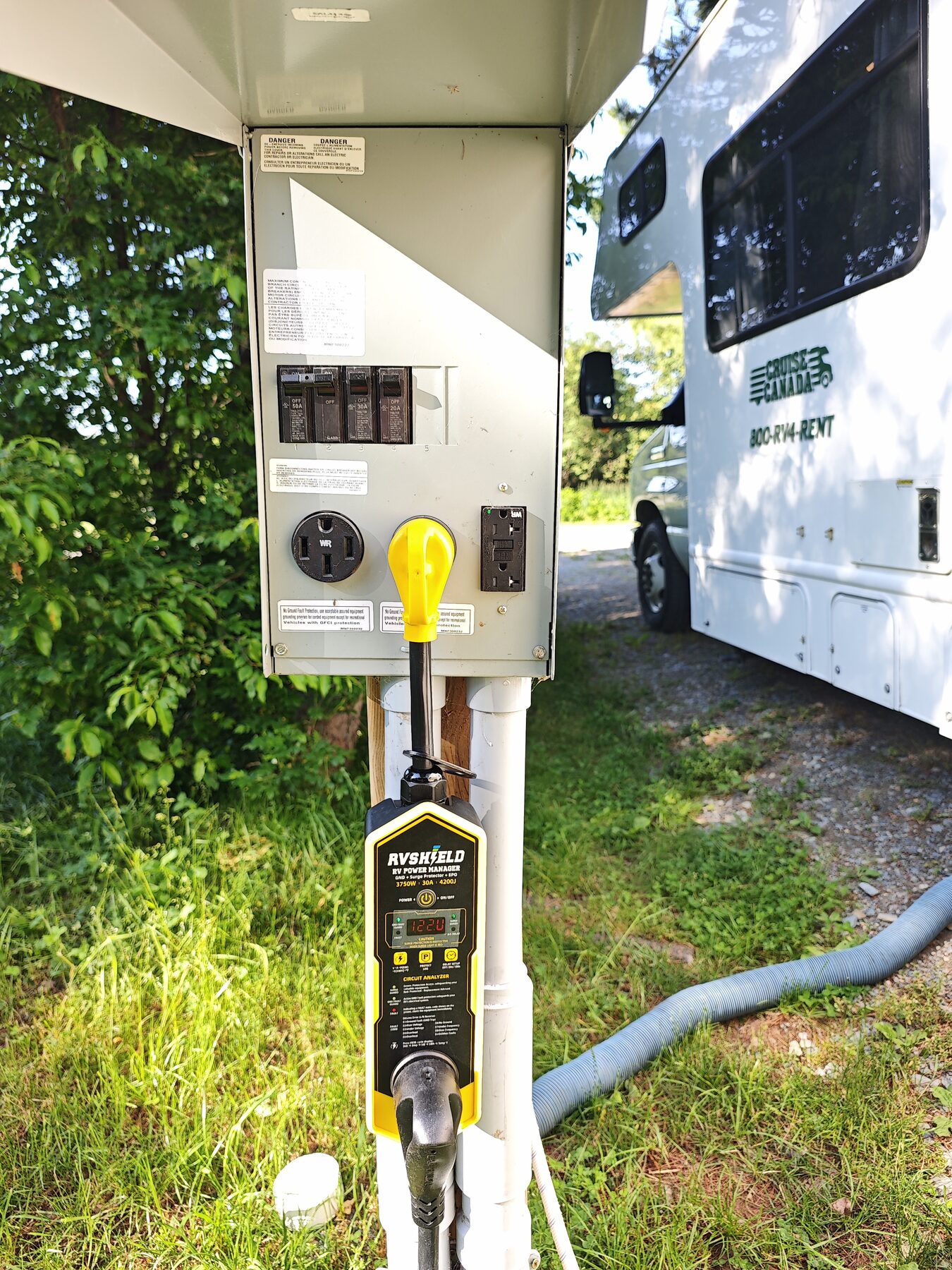
This supplied photograph shows a connected RVShield device at a campsite. It illustrates installation context; it does not document a low-voltage fault, demonstrate voltage boosting or establish this model’s cutoff setting.
Match the observation to the next contact.
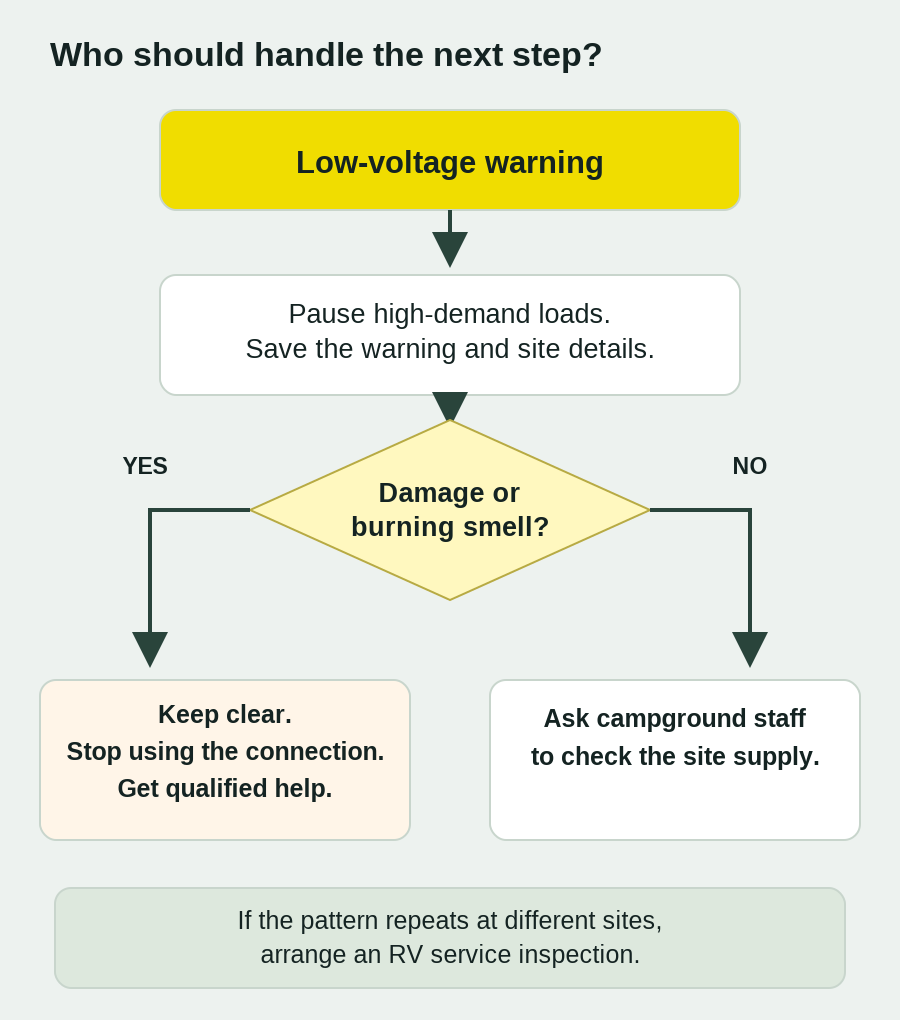
- Warning at this site?Give the office the site number and display details. Ask for the pedestal and supply to be checked, and whether another inspected site is available.
- The same pattern at different sites?Arrange an RV service inspection. Share the circumstances and equipment models rather than assuming every warning has the same cause.
- Burning smell or visible damage?Stop using the connection and keep clear of damaged equipment. Contact staff or qualified service. Reconnecting to see whether it happens again is not a useful check.
Keep the checks observational.Do not open the pedestal, probe live terminals or bypass a protective shutoff. If the connection cannot be approached safely, ask staff for help rather than handling it yourself.
If power was interrupted and the A/C has a recovery delay, follow its instructions before trying to restart it. Our A/C delay guide explains why the wait can be part of normal operation.
Monitoring, disconnection and boosting do different jobs.
A product name does not tell you its complete behaviour. Southwire distinguishes devices with circuit analysis and surge protection from models that also provide automatic shutoff. Confirm the model rather than inferring shutoff from a status light. [2]
| Function | What it does | What to confirm |
|---|---|---|
| Monitoring | Reports a reading or detected condition. | Does the unit only report, or can it interrupt output? |
| Disconnection | Interrupts output under its specified conditions. | Which conditions, recovery rules and delay are documented? |
| Voltage boosting | Changes the delivered voltage within the equipment’s operating limits. | What else does the model include, and what use does its manual permit? |
FRVA’s reference article discusses an older voltage-booster installation. Current combined units can have different capabilities: Power Watchdog’s present Power Center description includes boosting, monitoring and emergency shutoff in one product. Treat these as model examples, not interchangeable categories. [3][4]
A booster is not the first answer to an unexplained warning. Have the supply and connection checked, follow campground rules and use equipment as its manufacturer directs. This guide does not prescribe an installation order for aftermarket devices.
Keep the reading.
Get the supply checked.
Keep high-demand loads off while the issue is unresolved. After the supply question is addressed, use your equipment’s recovery instructions and a realistic appliance plan before returning to normal operation.
For appliance planning after the supply issue is resolved, see what you can run together in a 30A RV.
Sources and photo credits.
- 1. Airstream — Explaining Shore Power. Supports the 30A/120V service context; it does not set a universal appliance operating range.
- 2. Southwire — Recreational Power. Manufacturer distinction between circuit analysis, surge protection and Full Protection shutoff. Features vary by model.
- 3. FRVA — Boosting Low Campground Voltage, by Scott Fox. Selected editorial reference, published May 2022. Historical equipment discussion; no numeric limits or installation instructions from this article are generalized here.
- 4. Power Watchdog — Voltage Boosters. Current manufacturer example combining voltage boosting, monitoring and emergency shutoff; not a statement about every booster.
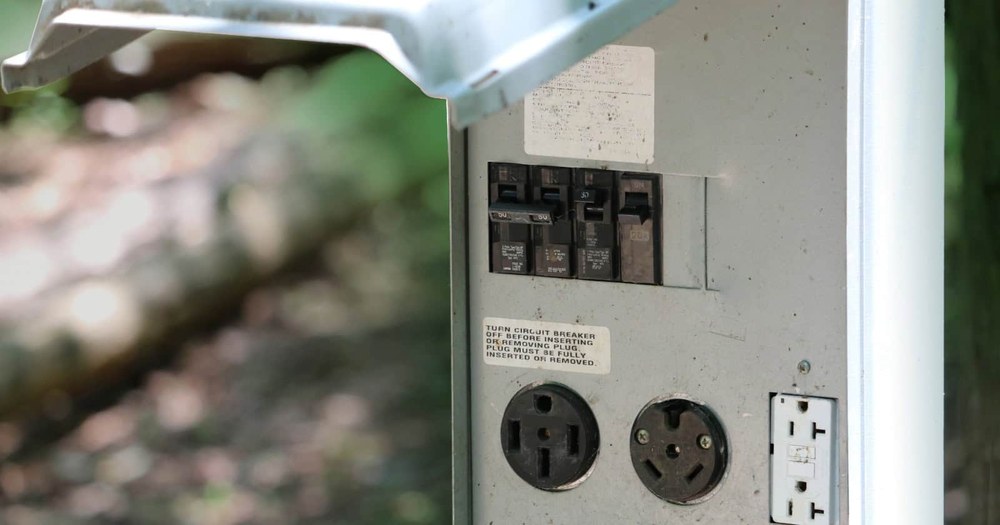
Installation photograph: user-supplied RVShield campsite image. It shows installation context, not a low-voltage fault test or voltage-boosting demonstration. The opening illustration and response/decision diagrams were created for this article.
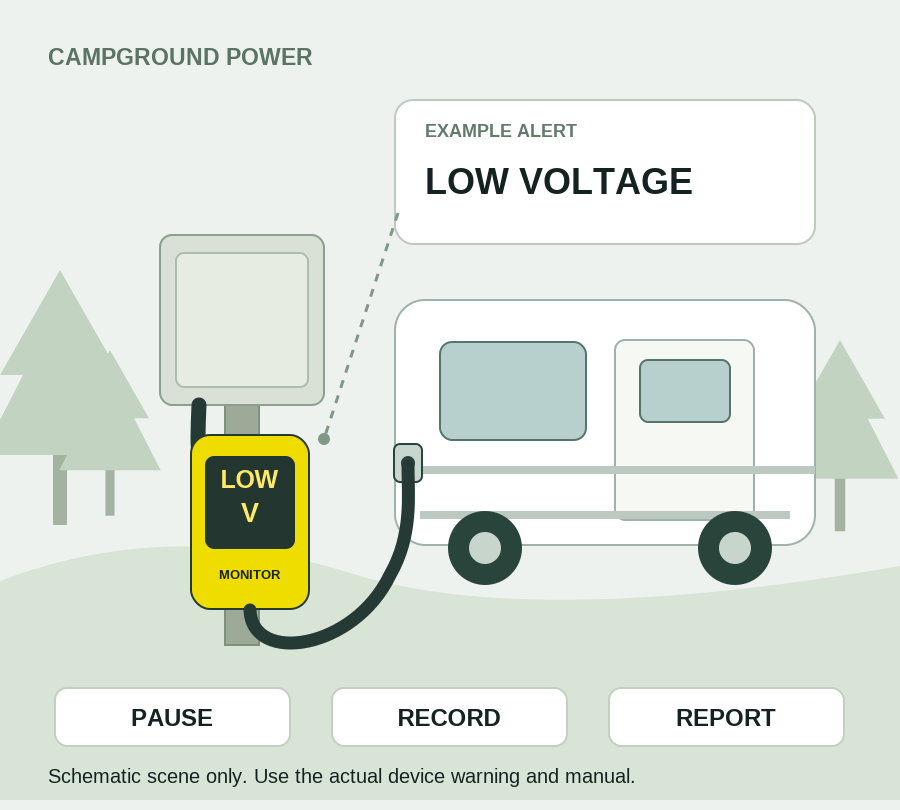
This page explains observations and next contacts; limits and operation depend on the installed equipment. The SVG response diagram was created for this article.