What can you run
together in
a 30-amp RV?
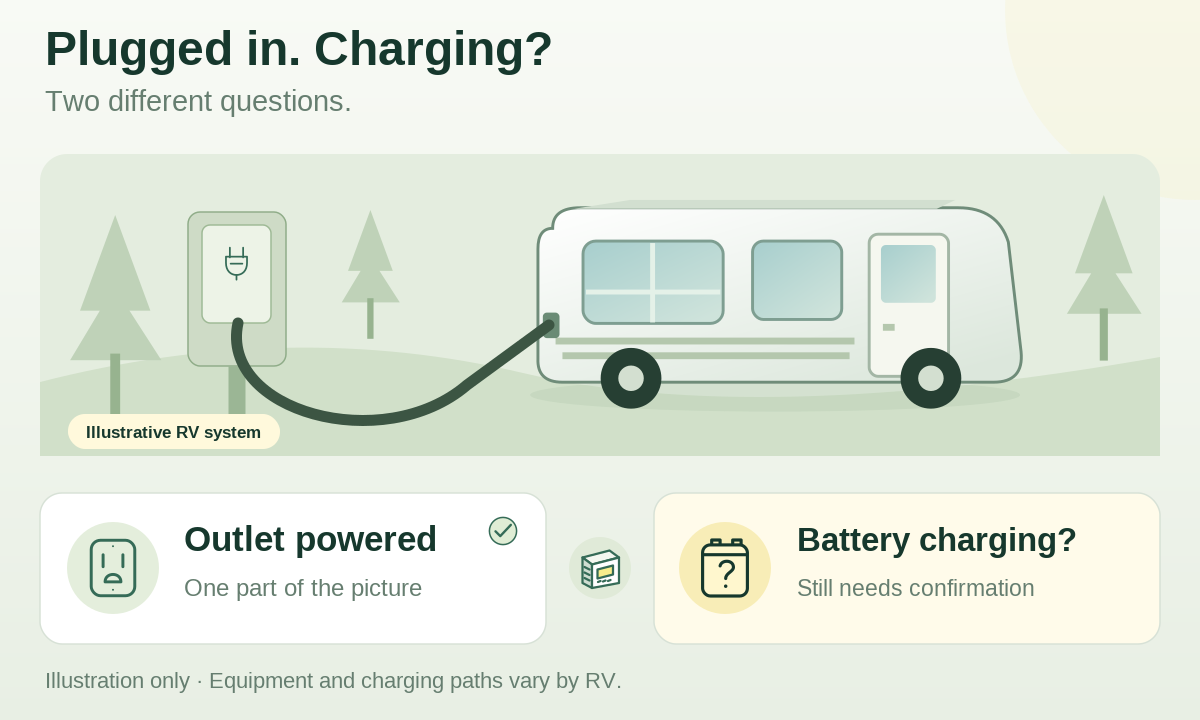
The answer starts with your appliance labels. Build a simple power budget, account for what starts automatically, and check the circuit as well as the whole RV.
Start with your own appliance labels.
A 30A RV on nominal 120V shore power has about 3,600W of rated supply capacity. That capacity is shared by the RV’s 120V loads; each branch circuit has a separate limit too.S1
To decide what can run together, list the appliances that may be on at the same time, read their input ratings and identify which circuit serves each one. Leave room for loads that start automatically. Being below 30A in a running-load calculation is not a guarantee that every appliance combination will work.
Find the input rating on each appliance.
Begin with the A/C, microwave and electric water heater, then add the appliances you use around meals or getting ready: a coffee maker, toaster, induction cooker or hair dryer. Use the label or the manual for the exact model, rather than assuming every appliance in a category draws the same current.
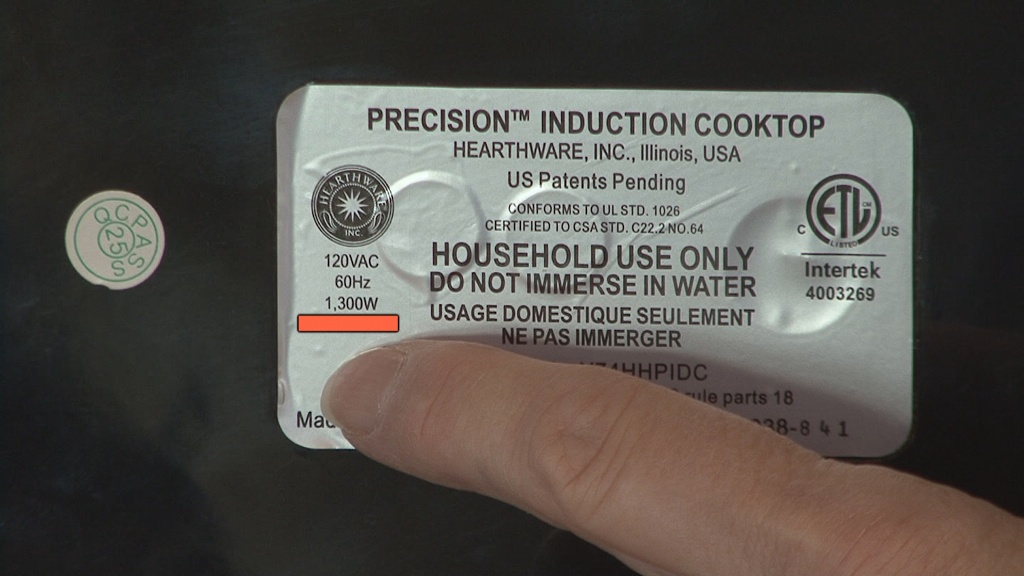
The example label above says 120VAC and 1,300W. It belongs to the photographed cooktop. Your own model may differ. If an appliance lists input current in amps, record that value; do not substitute a performance figure such as a microwave’s cooking-output wattage.
This is a simplified estimate when power factor is near 1. For motors and electronic loads, use rated input current or manufacturer data when available. Starting demand can exceed normal running demand.S4
Go RVing’s guide demonstrates how appliance labels and circuit labels work together. Our worked budget below uses explicitly assumed input currents; it is not a test of the pictured appliances.S2
Add the loads that can overlap.
The example below assumes a 30A / 120V connection and these steady running currents. They are chosen for arithmetic practice, not offered as typical values for every model. The background allowance represents other loads on the 120V supply, including the AC input used by the converter/charger.
| Assumed load | Input current | Why include it? |
|---|---|---|
| Air conditioner | 13A running | May cycle back on while you cook. |
| Microwave | 12A input | Use the electrical input, not cooking output. |
| Electric water heater | 10A | Can switch on without a fresh action from you. |
| Other 120V loads | 3A combined | An assumed allowance; replace it with your own information. |
In this example, 13 + 3 + 12 = 28A. That leaves only 2A below the rated 30A supply, before allowing for changes in load or starting demand. Add the assumed 10A water-heater load and the total becomes 38A, above the supply rating.
Use the budget to plan, not to test a breaker. Switch off or postpone a high-demand appliance before adding another. Do not deliberately overload the RV to find out where it trips. The 30A rating is a limit, not a target to sit against.
Check two limits: the whole RV and the individual circuit.
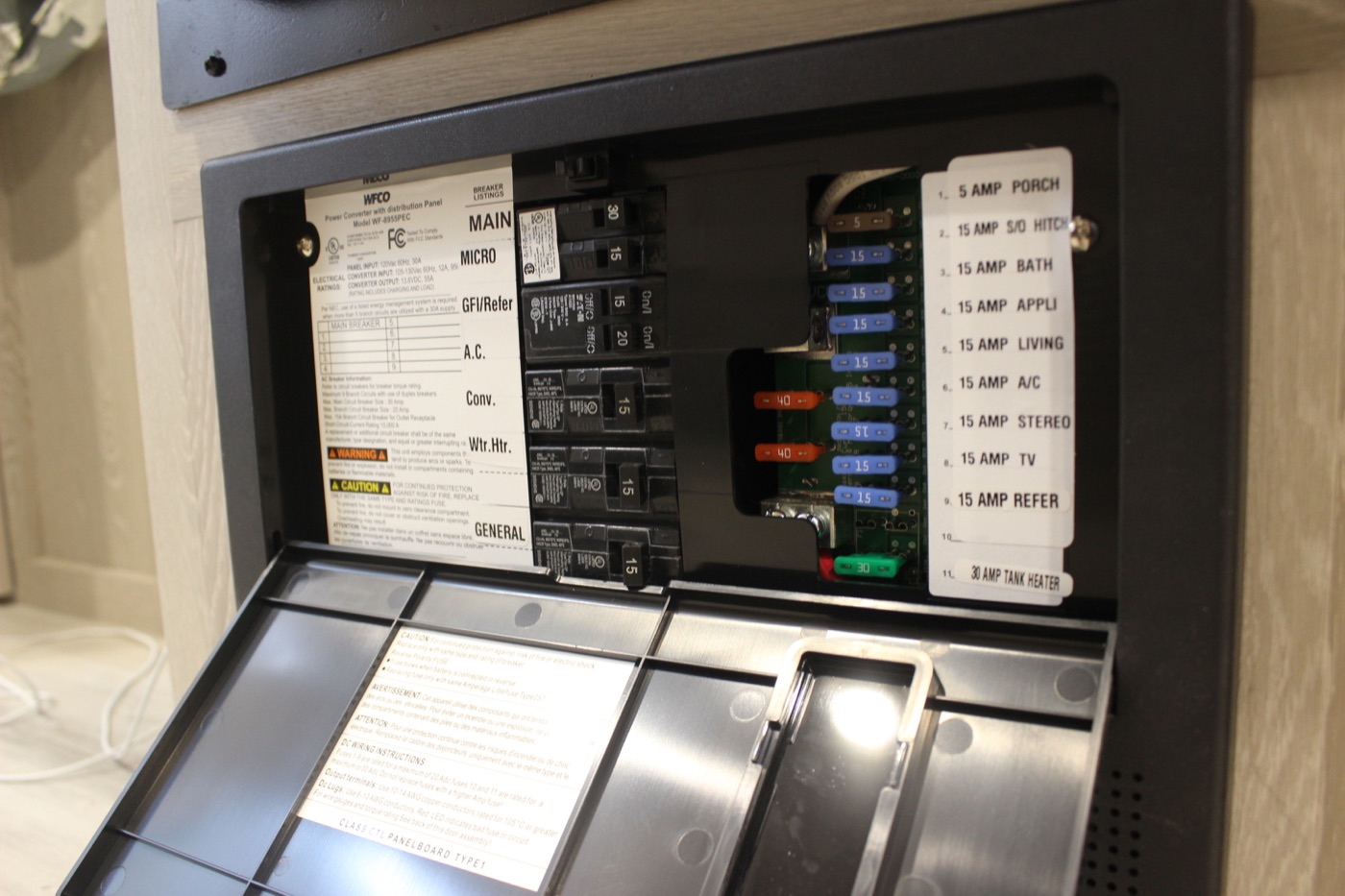
A small whole-RV total can hide an overloaded branch. For example, two assumed loads of 9A and 8A total only 17A, but they exceed a 15A circuit if both outlets are on that same circuit. Moving one plug to the next outlet does not prove it is on another circuit.
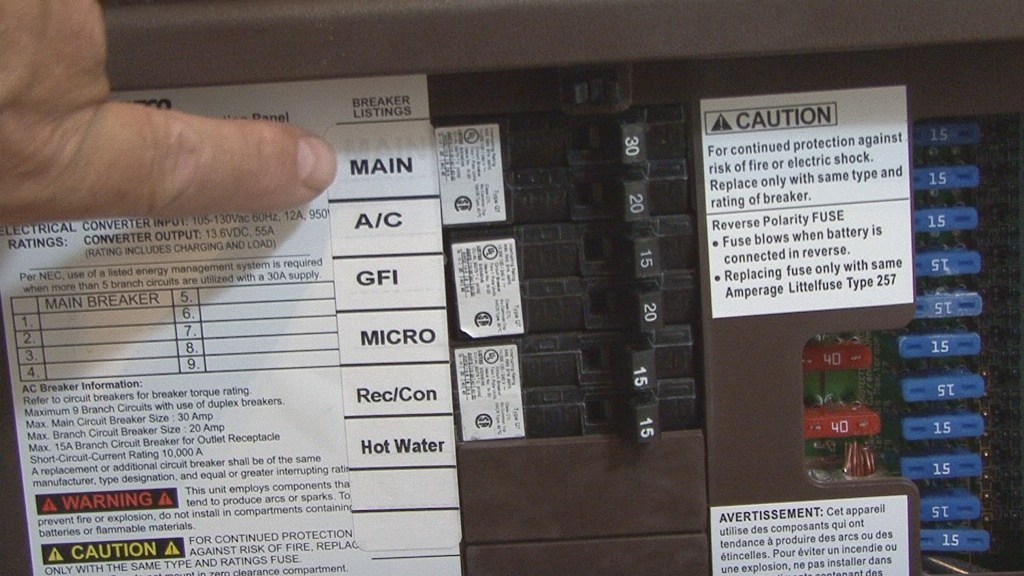
Read the labels available behind the panel’s normal access door. Use your RV documentation to identify circuits. Do not remove the inner cover, alter the wiring or change breaker ratings to make a combination work. Ask a qualified RV technician if the labels are missing or unclear.
| Question | What to check |
|---|---|
| Whole-RV demand | The sum of simultaneous 120V input currents against the available supply. |
| One branch circuit | The combined input current of the appliances on that circuit against its rating and applicable operating limits. |
| Automatic restarts | What may start while the microwave, kettle or hair dryer is already running. |
Plan around the next appliance you want to use.
Choose the heat load.
Check whether the coffee maker, toaster and electric water heater could overlap. Run short cooking jobs in sequence when the budget is tight.
Allow for the A/C.
Account for the air conditioner restarting automatically. A moment of silence is not proof that its demand has gone away for the next cooking task.
Check the background.
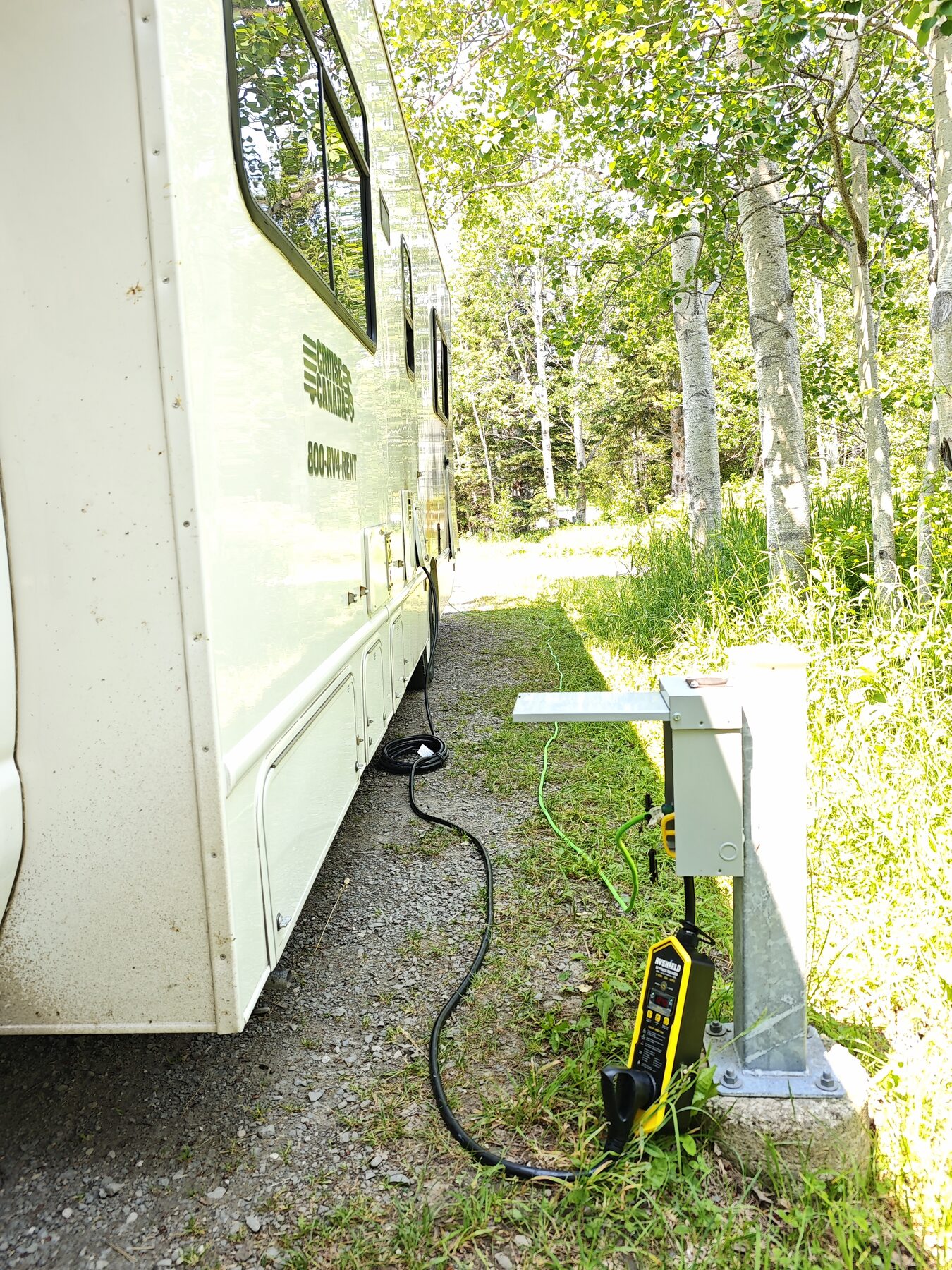
Include charging and other active loads. Use an installed monitor as directed; keep measurements on the 120V supply separate from 12V battery readings.
When using a documented alternative operating mode, follow the appliance manual and site rules. Do not assume every refrigerator or water heater has the same fuel options. Your own equipment list should drive the plan.
An adapter changes the connection; it does not turn a 30A RV into a 50A RV. Airstream also explains that appliance use needs managing when an adapter connects a rig to a lower-capacity supply.S3
If a breaker keeps opening with loads reduced, stop resetting it. Record which breaker opened and arrange a supply or RV service check. A persistent trip can need attention beyond rearranging appliances.S1
Keep your own short list of workable combinations.
Write down each appliance’s input rating, its circuit and what you will switch off before using it. Update the list when equipment changes. A plan made from your own labels is more useful than a blanket promise that “A/C plus microwave always works.”
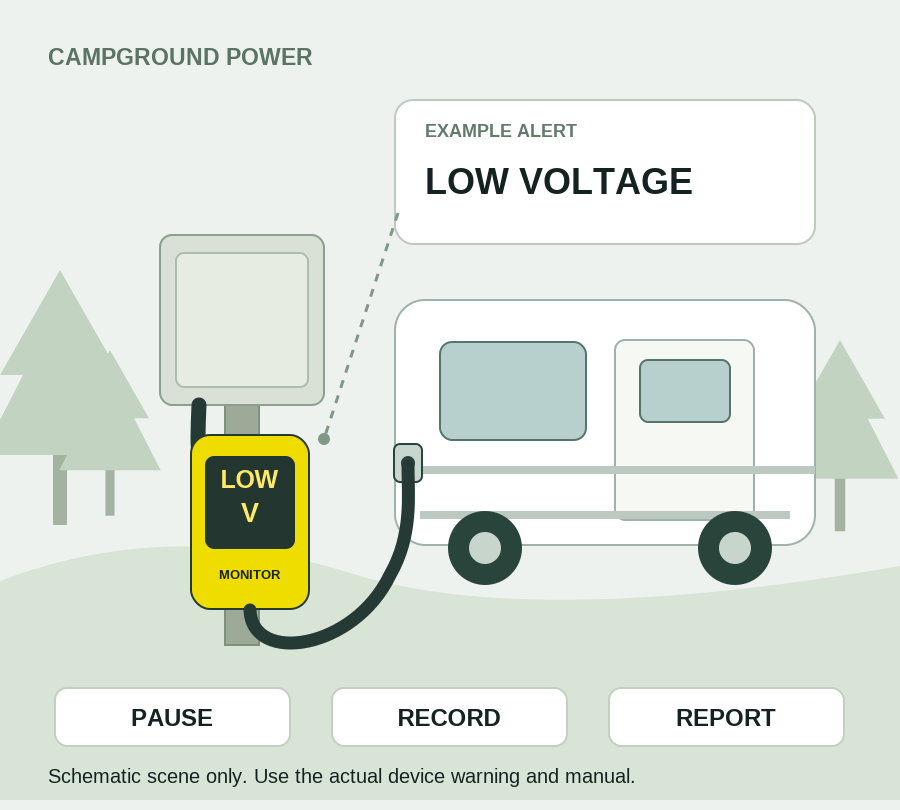
If voltage is low as well as capacity being tight, keep high-demand appliances off and ask the campground to check the supply. Browse our RV electrical guides for related checks.
References behind this guide.
- S1 · Airstream — Explaining Shore Power. Used for 30A / 120V / approximately 3,600W, RV power distribution and service inspection when reducing load does not solve repeated trips.
- S2 · Go RVing — RV Living On 30 Amps, Mark Polk & Dawn Polk. The selected editorial/photo reference for appliance labels and whole-RV versus branch-circuit limits. Illustrative currents and scenarios in this guide are identified as assumptions.
- S3 · Airstream — Power 101. Used for managing demand when adapting to a lower-capacity supply; vehicle-specific examples are not treated as universal combinations.
- S4 · Vertiv — Power Definitions and Terms. Used for the distinction between watts, volt-amperes and power factor; it is not an RV appliance-rating source.
Sources checked November 7, 2026. All worked currents are assumptions, not measured results. Breaker ratings and simple arithmetic do not replace appliance instructions or applicable electrical requirements.
Photos: Go RVing, “RV Living On 30 Amps,” by Mark Polk & Dawn Polk. Opening RV panel, cooktop label and labelled breaker panel reproduced with permission. These photographs are equipment examples, not RVShield measurements or field work.